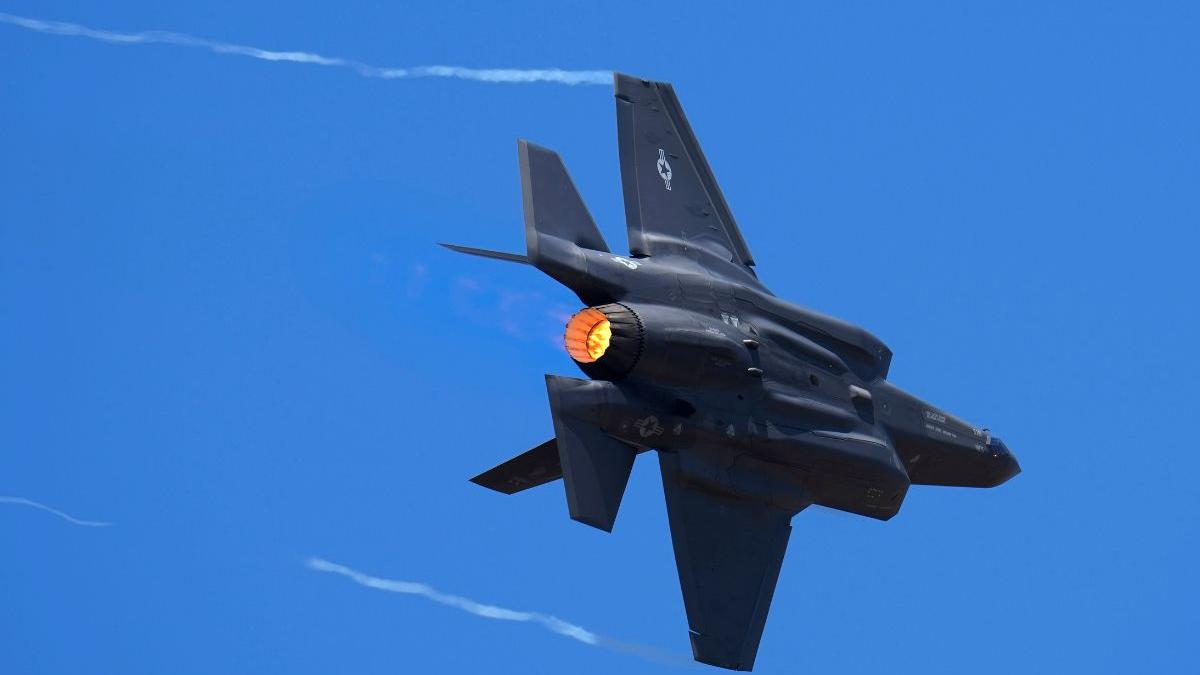
US military has carried out a series of self‑defence strikes on Iranian missile launch sites and naval vessels near the strategically vital Strait of Hormuz, even as talks on a ceasefire between Washington and Tehran continue to move forward.
According to a report by CNN, the attacks were confirmed by the United States Central Command (CENTCOM). Spokesperson Timothy Hawkins told the network that US forces had targeted missile launch sites as well as Iranian boats allegedly trying to deploy naval mines, saying the moves were aimed at protecting American troops from threats posed by Iranian forces.
Hawkins added that CENTCOM would keep defending its forces while exercising restraint during the ongoing ceasefire negotiations. He emphasized that the strikes were a defensive measure, not an escalation, and that the US would not abandon its commitment to a broader peace agreement with Iran.
The latest strikes come amid continued tensions between US and Iranian forces, despite a framework for a ceasefire that has been in place. Earlier in May, US forces had targeted Iranian military facilities that Washington said were linked to unprovoked missile, drone and small boat attacks on American warships passing through the Strait of Hormuz.
These operations were launched just hours after President Donald Trump indicated progress in ceasefire negotiations with Iran, saying Tehran’s stockpile of enriched uranium would either be handed over to the US or destroyed under international supervision. Trump posted on his social media platform, Truth Social, that the enriched uranium would either be immediately turned over to the United States for destruction or, preferably, destroyed in place with the Atomic Energy Commission or its equivalent acting as a witness.
Trump’s remarks appeared to signal a possible softening of Tehran’s stance as both countries attempt to finalise a broader peace agreement. This statement also aligns with a recent report by The New York Times, which claimed Iran had agreed in principle to give up its stockpile of highly enriched uranium as part of a US‑backed diplomatic framework aimed at reducing regional tensions.
Previous reports by CNN had suggested that disagreements over “language on Iran’s nuclear program and the lifting of sanctions” were delaying the finalisation of a comprehensive deal between Washington and Tehran. Trump had earlier maintained that any future agreement with Iran must be a “great and meaningful” deal, warning that the US would walk away if negotiations failed to meet expectations.
Meanwhile, Iran acknowledged progress in negotiations but cautioned that shifting American positions continue to complicate discussions. “It is correct that we have reached conclusions on a large portion of the discussion topics, but to say that this means the signing of an imminent agreement is something no one can claim. The frequent changes in the positions of American officials complicate every negotiation,” said Esmaeil Baqaei, a senior official at the Iranian foreign ministry.
At the same time, Israel has ramped up operations in Lebanon, striking more than 70 Hezbollah infrastructure sites using around 85 munitions. The Israel Defence Forces (IDF) announced that in the area of Tyre, 10 command centres, weapons storage facilities and additional infrastructure sites used by Hezbollah were struck. The IDF also said it eliminated Hezbollah terrorists operating on motorcycles, according to a post on X.
Additionally, the Israel Air Force attacked Hezbollah’s infrastructure in the Beqaa Valley and several other areas in Lebanon. Al Jazeera, citing Lebanon’s National News Agency, reported that Israeli air strikes have killed seven people and left several others wounded.
These developments underscore the complex security environment in the Middle East, with the US and Israel both taking military actions while diplomatic efforts continue to unfold.
As the region watches the unfolding events, the balance between military action and diplomatic negotiations remains delicate. The US continues to defend its forces while signalling a willingness to pursue a comprehensive deal with Iran, whereas Israel intensifies its campaign against Hezbollah in Lebanon.
The Middle East remains a tinderbox where military actions and diplomatic overtures collide. While the US and Israel press hard on the battlefield, talks with Tehran linger, hinting that a broader peace agreement may still be within reach, albeit with many hurdles to clear.
📋 Disclaimer
The analysis presented in this article is purely based on the author's understanding and opinions derived from various reliable sources. The author has reviewed multiple sources to present this analysis.
If any information is found to be incorrect or misleading, it is purely a mistake originating from the source material and the author shall not be held responsible for the same. The author is sharing personal analysis on the topic based on what the sources have reported.
💬 Join the Discussion
✎ Leave a Comment
Sign in with your Google account to comment.