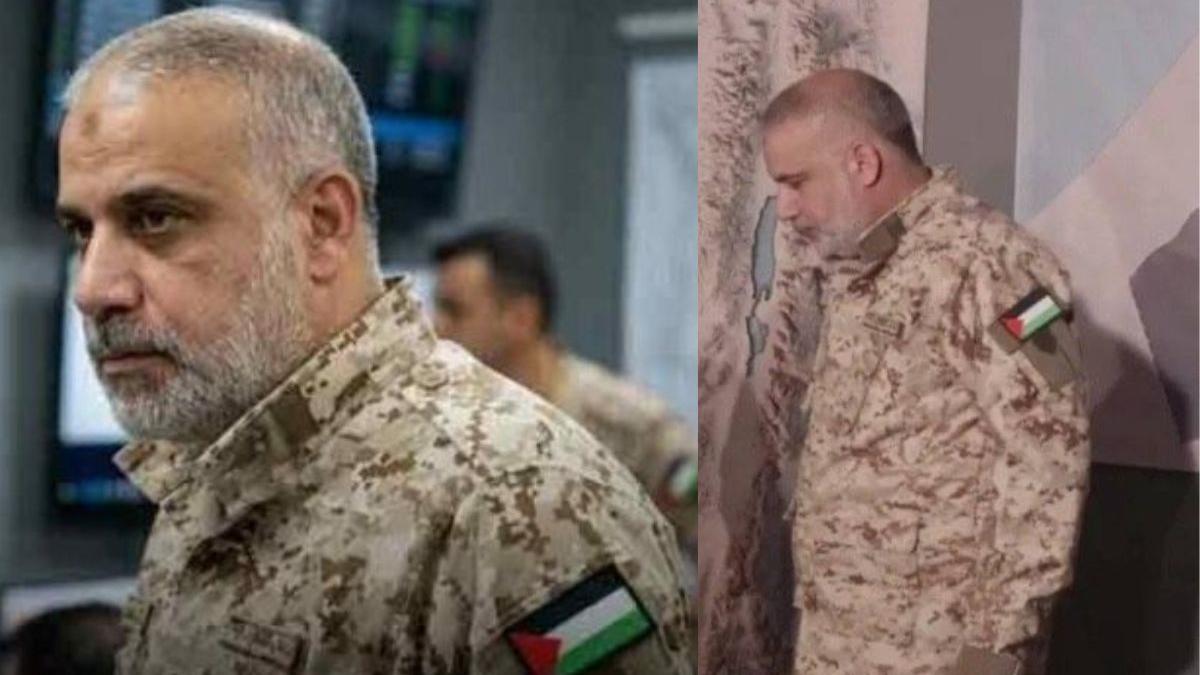
Hamas leader Mohammed Odeh was killed in an Israeli airstrike, raising concerns across the region. Get the latest updates and analysis.
Mohammed Odeh, a senior figure in Hamas’ military wing, was killed in an Israeli airstrike on Tuesday, according to reports. The strike also claimed the lives of his wife and two children, bringing the total casualties to five. Local hospitals in Gaza City confirmed the deaths and reported twelve injuries from the attack, which struck a market on the eve of Eid al-Adha.
Hamas issued a statement immediately after the incident, stating that Odeh had been active with the organization for more than three decades and was part of the first generation that helped establish its armed wing. The group described him as “one of the chiefs of staffs of the Qassam Brigades,” a title that underscored his seniority and influence within the movement.
Israeli Defence Minister Israel Katz announced that the Israeli military had targeted and killed Odeh, calling him “one of the architects” of the Oct. 7, 2023 attacks that sparked the ongoing conflict. Katz said it was the fourth time Israel has killed the head of Hamas’ military wing since the massacre, following the deaths of Izz al-Din al-Haddad on May 16.
Prime Minister Benjamin Netanyahu, who is preparing for upcoming elections, echoed Katz’s stance, threatening that Israel would continue to target anyone involved in the Oct. 7 attacks. The statements came as Muslims were preparing for Eid al-Adha, a major holiday that usually brings families together for feasting and prayers.
The holiday has taken on a somber tone in Gaza, where most of the population remains displaced in tents or temporary shelters after the war. According to U.N. estimates, around 90% of Gaza’s more than two million residents have lost their homes, with many living in conditions marred by rat infestations and sewage pools. Aid agencies report that the majority of the population depends on external assistance to survive.
In Khan Younis and Gaza City, the destruction of buildings, including a ruined mosque, has left the area in ruins. Despite the devastation, people gathered for Eid prayers, but the celebrations were muted, with only a few balloons visible on one street. Displaced residents described the holiday as “not Eid… we’re dead,” reflecting the deep sense of loss and grief that pervades the region.
Eyewitnesses from a joint funeral procession for Odeh’s family recounted how mourners covered the four bodies with green Hamas flags and marched from a mosque through the city, chanting slogans and firing shots in the air. Some carried posters bearing Odeh’s image and the words “one of the chiefs of staffs of the Qassam Brigades,” highlighting his status within Hamas.
The ceasefire that was reached between Israel and Hamas in October remains fragile. Israeli attacks have killed more than 880 Palestinians since the ceasefire was signed, according to Palestinian health officials, who say many civilians have been among the dead. Four Israeli soldiers have also been killed during this period in Gaza.
Israel launched its offensive in Gaza in response to the Hamas attacks in October 2023, which killed some 1,200 people and took 251 others hostage. The Palestinian Health Ministry in Gaza reports that over 72,803 Palestinians have been killed by Israeli fire, though it does not differentiate between civilian and militant casualties.
As the conflict continues, the targeting of high-profile Hamas leaders like Odeh signals a shift in Israel’s strategy, focusing on eliminating key figures involved in the Oct. 7 attacks. This approach carries significant risks, as it may further inflame tensions and accelerate the cycle of violence, potentially leading to more civilian casualties and humanitarian crises in Gaza.
The death of Mohammed Odeh marks a pivotal moment in the ongoing hostilities between Israel and Hamas. While Israel aims to weaken Hamas’ operational capabilities by eliminating its top commanders, the broader implications for Gaza’s civilian population remain profound. As the region mourns and the conflict escalates, the international community watches closely, hoping for a resolution that can bring lasting peace.
The killing of Mohammed Odeh illustrates the escalating cycle of targeted strikes and retaliation that fuels the Israeli‑Hamas conflict. With Gaza’s civilian population bearing the heaviest toll, the international community remains concerned about the humanitarian fallout and the prospects for a sustainable ceasefire.
📋 Disclaimer
The analysis presented in this article is purely based on the author's understanding and opinions derived from various reliable sources. The author has reviewed multiple sources to present this analysis.
If any information is found to be incorrect or misleading, it is purely a mistake originating from the source material and the author shall not be held responsible for the same. The author is sharing personal analysis on the topic based on what the sources have reported.
💬 Join the Discussion
✎ Leave a Comment
Sign in with your Google account to comment.