


The corporate boardroom decisions driving the world's largest digital marketplaces have taken a sharp, highly strategic turn. For the past two years, global financial analysts and retail investors have been eagerly tracking the road to a massive initial public offering (IPO) for retail titan Flipkart. It was widely expected to be one of the most significant public stock listings in consumer technology history, serving as a clear indicator of the maturity and scale of digital commerce in rapid-growth emerging economies. However, citing high global market volatility and a crowded public offering pipeline, the Walmart-owned retail giant has quietly paused its IPO discussions indefinitely, choosing to remain within private capital structures for the foreseeable future.
While external market instability and global macroeconomic trends make for a convenient corporate explanation to placate financial watchdogs, the reality on the ground points to a much more fundamental shift in daily consumer habits. Traditional e-commerce models—built around forty-eight-hour shipping windows, vast out-of-town fulfillment warehouses, and centralized courier sorting facilities—are experiencing noticeably stagnant growth. Meanwhile, a relentless new retail paradigm has exploded across urban landscapes: quick commerce. Consumers are increasingly abandoning traditional digital shopping carts if they have to wait days for delivery, shifting their loyalties instead to hyper-local platforms that deliver groceries, electronics, and daily essentials to their front door in under ten minutes.
The Absolute Dominance of Dark Store Networks
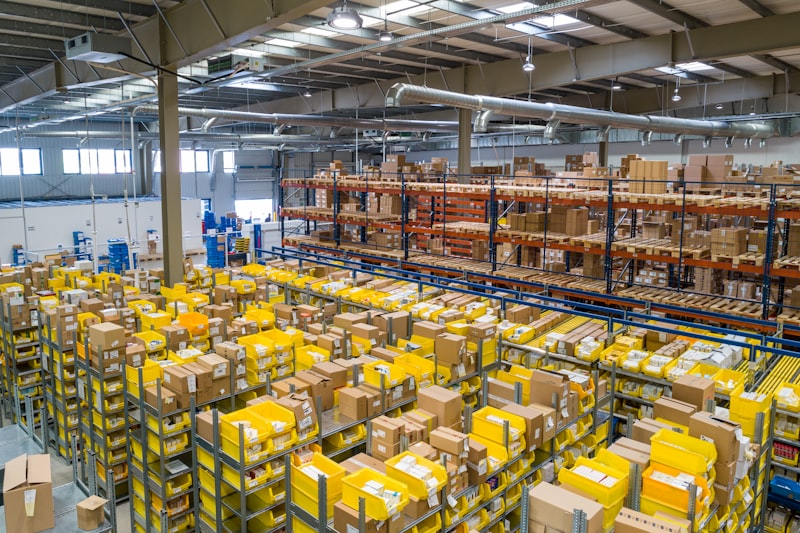
To survive in this fast-moving, low-margin environment, traditional e-commerce companies are having to completely discard their long-standing logistics blueprints. Winning the quick commerce game requires moving away from massive, distant distribution hubs and building incredibly dense networks of highly localized micro-fulfillment centers, commonly known as "dark stores," deep within heavily populated urban neighborhoods. This spatial reorganization of the supply chain transforms proximity into the ultimate competitive advantage, rendering older logistics systems obsolete.
These dark stores are highly optimized, windowless mini-distribution centers designed with one metric in mind: blistering operational speed. Every single square foot of layout is engineered by algorithmic modeling to maximize picking and packing efficiency, allowing automated inventory systems to direct warehouse staff to products via handheld terminals in seconds. Instead of tracking package processing times in days or hours, these facilities measure success in seconds. When a digital order is placed, it is picked, packed, and handed off to a waiting delivery rider in under three minutes, creating an incredibly fast operational loop that legacy e-commerce systems simply cannot match.
This logistical pivot requires a complete rethinking of inventory forecasting. Because a dark store has a fraction of the physical storage space of a traditional regional warehouse, it cannot hold an endless catalog of items. Retailers must rely on highly advanced, localized predictive modeling to analyze hyper-local purchasing trends down to specific neighborhoods. The system must accurately predict exactly how many units of fresh milk, organic produce, or premium smartphone chargers a particular neighborhood will buy on a Tuesday morning, ensuring that stock is continuously replenished via automated micro-supply runs throughout the day without overloading the store's physical footprint.

Why Flipkart is Pouring Capital into its Minutes Service
This massive shift in retail dynamics explains exactly why Flipkart has chosen to delay its highly anticipated public listing and maintain tight control over its massive cash reserves. Going public forces an enterprise under the intense, short-term microscope of quarterly profit expectations and Wall Street margin scrutiny. This intense public pressure can make funding aggressive, highly expensive, and initially unprofitable structural infrastructure pivots incredibly difficult to justify to risk-averse public shareholders. By remaining private for now, the company can freely pour hundreds of millions of dollars into scaling its instant delivery arm, "Flipkart Minutes."
The veteran brand is locked in a high-stakes, capital-intensive battle against agile, hyper-local native competitors who have already established dominant market positions in tier-one metropolitan areas. Capturing market share from these established players requires massive, sustained capital investments to secure premium, expensive urban real estate for new dark stores, build out reliable, high-volume delivery fleets, and offer aggressive promotional pricing to win over notoriously fickle consumers. This is an incredibly expensive street fight where companies burn cash to establish territorial dominance, and Flipkart needs a massive, uncompromised private runway to establish itself as a permanent pillar of the instant delivery ecosystem.
A Global Transformation in Urban Consumer Culture
What originally started as a niche convenience service designed for busy urban professionals looking for rapid grocery drop-offs has quickly evolved into a permanent change in mainstream consumer expectations. The quick commerce model is no longer just for milk, bread, and emergency snacks; it has aggressively expanded into high-margin consumer categories like flagship smartphones, premium cosmetics, home appliances, clothing, and office supplies. If a consumer's laptop charging cable breaks before a major presentation, or a specific beauty product runs out right before a social event, they are no longer willing to plan a weekend shopping trip or wait for a traditional shipping truck. They open an app and expect the solution to arrive in minutes.

This cultural shift is forcing a massive reorganization of urban real estate and transport infrastructure globally. Cities are seeing a decline in traditional brick-and-mortar storefronts, while demand for micro-fulfillment hubs and electric delivery vehicle fleets is skyrocketing. The technology platforms that manage to build the most efficient, highly automated, and predictive micro-delivery networks will effectively control the future of retail distribution. Flipkart's clear choice to delay its IPO to focus entirely on winning the instant delivery space proves that the global battle for consumer relevance will be won or lost in minutes, not days, rewriting the rules of the commercial economy.

No comments:
Post a Comment